


How Much Protein You Need
The standard recommendation for protein is around 0.75g per kg of body weight a day – for most people, roughly 45–55g. That's the standard reference intake for healthy adults – set to cover nearly everyone, not just to prevent a deficiency – although some people benefit from more.
People training seriously, or eating less while trying to hold onto muscle, are often advised to aim higher – the figure usually discussed for strength and endurance athletes is around 1.2–2g per kg. Ordinary activity doesn't automatically put you in that range. In practice, most people in the UK already eat well above the reference intake – average intake is around 67g a day for women and 85g for men.
Older adults are one group who often fall short. Muscle mass naturally declines with age, and research suggests protein needs actually rise rather than fall – many guidelines recommend around 1–1.2g per kg of body weight for older people, above the general adult minimum. Getting enough protein, alongside staying active, helps protect muscle, strength, and independence later in life.
What this means in practice
Rather than chasing a daily total, it's easier to think meal by meal. A useful guide is 20–40g of protein per meal, depending on portion size and how much you eat overall. You don't need to calculate it exactly, but meals with very little protein tend to be less filling and less satisfying.
Where most protein actually comes from
If your breakfast and lunch are on the lighter side – toast, cereal, a simple sandwich – then dinner is carrying most of the day's protein. That's fine, but it does mean a low-protein dinner is hard to make up for elsewhere.
What a meal needs
A simple way to think about it:
- a source of protein
- vegetables
- something to bulk it out (rice, potatoes, bread or pasta)
When one of these is missing, the meal usually feels slightly off.
Getting a mix across the week
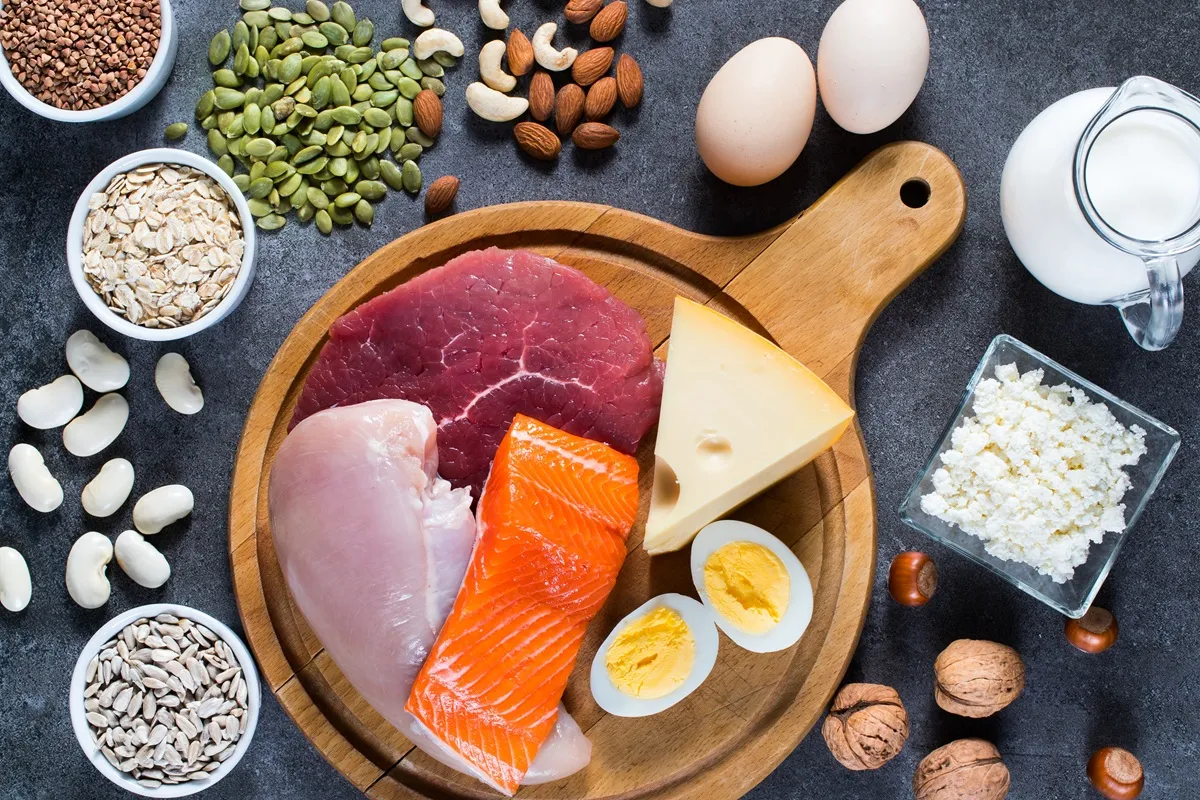
It's worth varying where the protein comes from – across a normal week that might be chicken, beef, pork, fish, eggs, dairy, and beans or lentils. No need to plan it closely, but a mix tends to work better than repeating the same thing.
How this works in RealPlate
Every recipe is built to stand on its own as a complete meal: a clear source of protein, enough of it to be filling, and a balance with vegetables and carbs. For most people that covers the protein side without any extra thought – though needs vary a lot with body size, age and how active you are, so scale the portions if yours are at either end.
In practice
Include a decent portion of protein in your main meal and, most of the time, that covers a large part of what you need for the day.
Sources
British Heart Foundation
BBC
PROT-AGE Study Group (2013)
Ready to put real food on the table this week?
Start planning →