
The Pan That Makes Pasta Easier
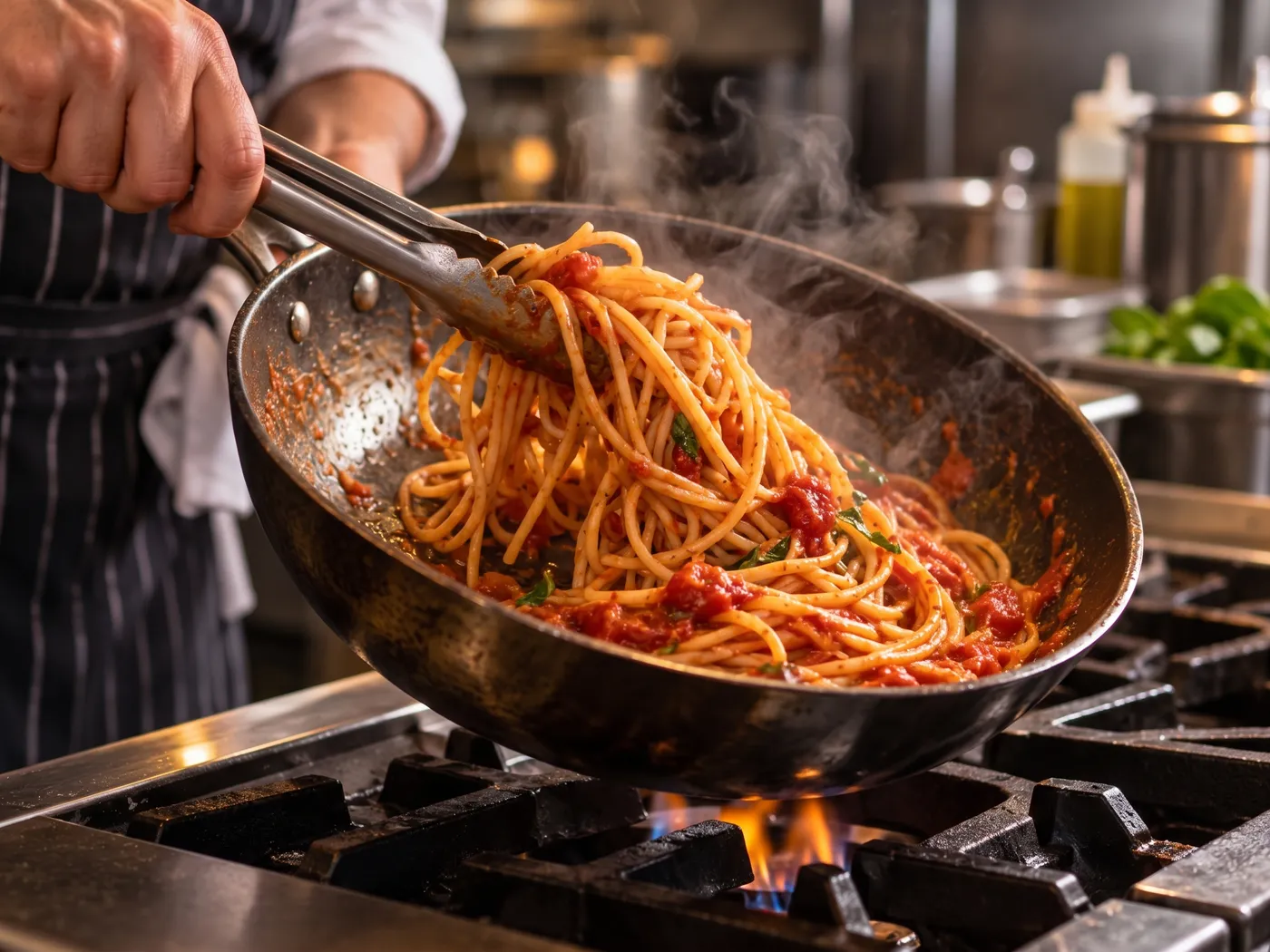
In Italy, pasta isn't drained and then topped with sauce. It goes back into the pan with the sauce for a final minute over the heat, tossed until every strand is coated. Italian kitchens have a pan made for exactly that job, and once you know why it works, it's an easy pan to justify.
1. What it is
It's called a padella saltapasta – literally a pan for tossing pasta. It looks like a frying pan that has grown taller: a wide base, high sides that flare outwards, and a long handle. It's usually made of aluminium, which keeps it light enough to lift and toss with one hand even when it's full.
The flared sides are the clever part. When you flick the pan, the pasta rides up the curve and folds back over itself instead of going over the edge. That's how the sauce gets worked through rather than sitting on top.
2. Why finishing in the pan matters
A minute in the pan does two things. The pasta takes on the flavour of the sauce instead of just wearing it, and the sauce clings to the strands rather than pooling in the bottom of the bowl. It matters most when the sauce is light – an oil-based one in particular, where there's nothing thick to hold it in place.
Several of our recipes finish this way. The tuna and olive spaghetti is tossed through its sauce with a splash of pasta water, and in the garlic and chilli king prawn spaghetti the olive oil is the sauce, so the final toss is what brings it together.
3. Which size
- 28cm – plenty for two
- 32cm – the one to get for four
- 36cm and up – for six or more, but heavy to toss when full and wider than most hob rings
Bigger isn't automatically better. A pan much wider than the ring heats unevenly, and a loaded 40cm pan is more than most people want to lift.
4. Check your hob first
Plain aluminium doesn't work on induction. If that's what you cook on, look for one with a steel plate in the base, which will say it's induction-ready.
5. Why it's worth having
If you cook pasta for four, you'll know the moment an ordinary frying pan runs out of room: the sauce is in, the spaghetti goes on top, and there's no space left to toss it. A saltapasta is built for that moment. The high, flared sides hold a full batch with room to move, so the pasta and sauce come together in one pan instead of being stirred awkwardly or tipped back into the saucepan.
It earns its place for more than pasta, too. The same shape suits anything you'd toss rather than stir – greens wilted in garlic and oil, a stir-fry, potatoes finished in butter. If you make pasta for four most weeks, it's one of the most useful pans you can own.
Ready to put real food on the table this week?
Start planning →